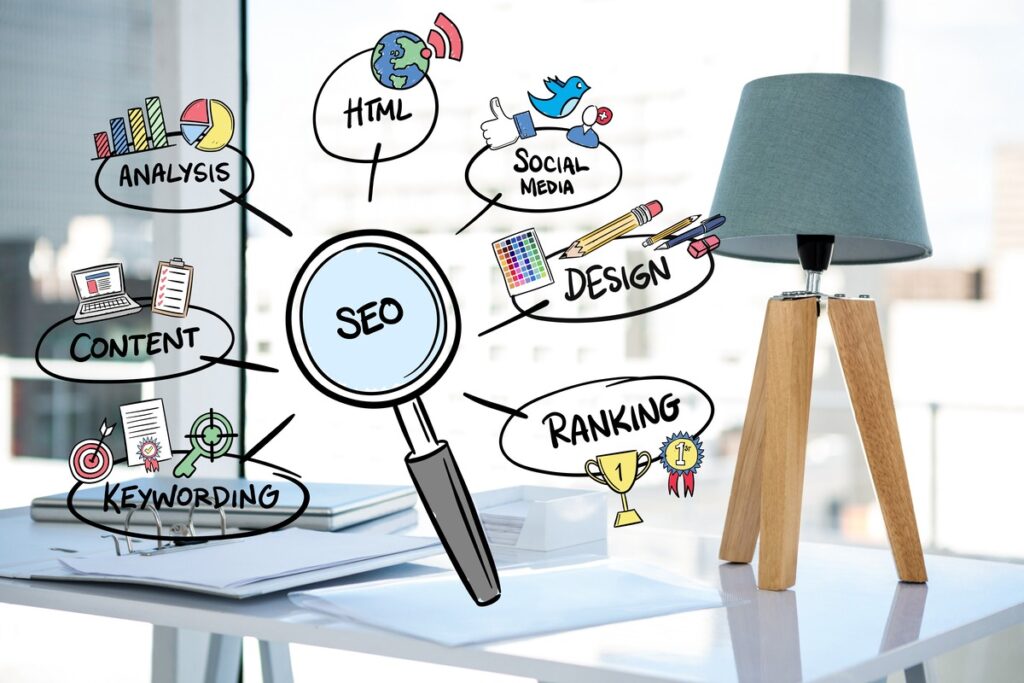
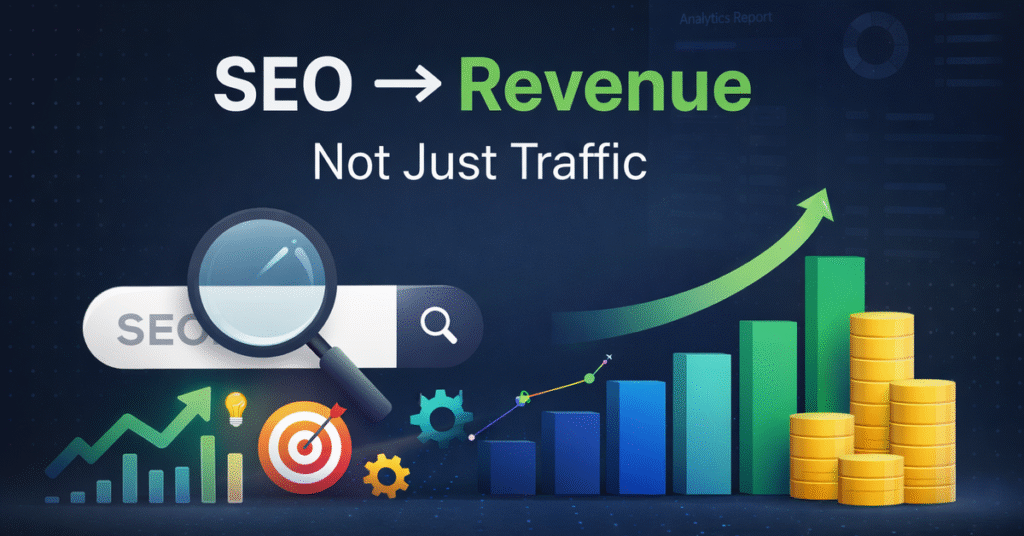
Most businesses view SEO as a channel that helps their website become more discoverable on search engines, driving traffic, impressions, and keyword rankings. It is rarely considered beyond these surface-level metrics, and even less often is it treated as a direct revenue-generating channel.
As a result, many businesses prioritise paid ads for immediate visibility, often leading to higher customer acquisition costs and, in some cases, poor-quality leads.
What many businesses don’t realize is the fact that when done correctly, SEO becomes one of the most cost-effective and trustworthy growth channels available. It not only attracts new users but also builds long-term credibility, trust, and sustainable revenue. Unlike paid channels, SEO compounds over time, delivering increasing value as authority and visibility grow.
The Myth – SEO Is Only About Traffic & Rankings
One of the most common misconceptions among business owners is that SEO is limited to keyword rankings and traffic generation. While these metrics are important, many businesses fail to recognise how SEO can be directly tied to their revenue generation model.
This belief is often reinforced by concerns such as:
- Rankings don’t translate into conversions
- High traffic doesn’t reflect in sales
- Paid ads deliver faster results
These concerns are understandable. However, the real issue lies in how SEO is commonly planned and executed.
Many brands and agencies focus only on increasing traffic without analysing who the users are, what intent they carry, or whether the content genuinely addresses their pain points or concerns. When SEO ignores user intent and business relevance, it naturally feels like a vanity channel, delivering numbers without value.
The problem is not SEO itself, but how it is perceived, measured, and implemented.
The Reality – Revenue Is a Measurement Problem, Not an SEO Problem
SEO is often seen as ineffective because it is measured using the wrong metrics.
When SEO efforts are evaluated purely on keyword rankings and traffic growth, they appear disconnected from business objectives. Without alignment to leads, conversions, or sales, SEO naturally feels unreliable.
SEO becomes impactful only when it supports the entire user journey, and not just the awareness stage. Businesses must cater to users across all funnel stages, awareness, consideration, and conversion.
When SEO strategies are aligned with:
- Business goals (leads, signups, sales)
- User intent
- Clear conversion pathways
organic growth transforms into a predictable and scalable growth lever rather than a standalone visibility channel.
One of the primary reasons businesses distrust SEO today is the inability to connect SEO outcomes with measurable revenue. This leads to the perception that SEO is slow or ineffective, when in reality it is being evaluated at the wrong stage of the funnel.
How SEO Actually Drives Revenue – The Actual Framework
Below is a framework outlining how SEO should be structured to function as a revenue-generating channel rather than just an awareness tactic.
1. Start With Business Objectives, Not Keywords
Before diving into keyword or content research, it is essential to understand the business and its few aspects clearly such as
- Revenue goals (leads, sales, subscriptions)
- Priority products or services
- Target customer segments
- Sales cycle length
Without clarity on the above factors, SEO often drives irrelevant traffic that looks good in reports but delivers little commercial value.
2. Map Search Intent to the Buyer Journey
Once the business and audience are clearly defined, SEO efforts must be aligned with user intent across the funnel:
- Informational intent (problem awareness)
- Commercial intent (solution comparison)
- Transactional intent (ready to act)
For example, users unfamiliar with a brand need educational content first. As they progress through the funnel, content should guide them toward consideration and eventually conversion stage, making them ready to act and purchase.
3. Build Content That Supports Decisions, Not Just Discovery
Content strategy should be built around user intent and decision-making.
Each piece of content should aim to:
- Address buyer concerns
- Explain use cases and solutions
- Compare alternatives
- Guide users toward taking action
When content supports decisions rather than just discovery, organic traffic becomes more qualified and conversion-ready.
4. Optimise for Conversions, Not Just Rankings
SEO cannot be considered a growth channel if it stops at rankings.
Even relevant organic traffic will fail to convert if:
- Page experience is poor
- CTAs are unclear
- Internal linking lacks direction
- Value propositions are weak
Clear CTAs, intuitive navigation, and structured content flow are essential to ensure users take meaningful actions instead of exiting after consumption.
5. Measure SEO Across the Funnel
To truly connect SEO with revenue, performance must be measured across the entire funnel.
Instead of focusing only on traffic and rankings, businesses should track:
- Assisted conversions
- Lead quality from organic traffic
- Content influence on sales decisions
- Long-term customer acquisition cost (CAC)
SEO compounds over time, and its impact often spans multiple touchpoints, making funnel-based measurement critical.
Why SEO Is Still One of the Most Cost-Effective Growth Channels
SEO is a channel that builds long-term visibility and trust through compounding effort.
Paid advertising delivers immediate results, but traffic and leads stop the moment spending pauses. SEO, while slower initially, becomes increasingly cost-effective when executed with the right strategy.
As organic visibility and authority grow, businesses benefit from lower CAC, higher trust, and sustained lead generation. SEO also strengthens other marketing efforts by improving brand credibility and campaign efficiency.
When executed strategically, SEO does not compete with paid marketing, it complements it, acting as a stable foundation for long-term growth.
Conclusion
SEO if measured in isolation from business outcomes could often be perceived as slow or unreliable. Its impact gets naturally diluted when its treated purely as a traffic or ranking exercise.
However, when it is aligned with business goals, buyer intent, and conversion pathways, it becomes a consistent contributor to revenue and long-term growth.
When executed correctly, SEO does not just leads to better visibility on the search results, but builds a sustainable growth channel that compounds over time.